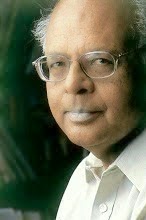
[I wrote this in the Calcutta Telegraph of 13 January 2009. I came in touch with American media when I spent a year in Stanford in 1999-2000, and was impressed by its vigour and variety. Developments in the US are a pointer to what will happen elsewhere.]
THE US NEWS MARKET |
Indians still read newspapers. Some get their news from television; fewer from the internet. The variety of sources is greater in the United States of America. Television and internet are more widely available. Within television there is a distinction between networks, which are available free to anyone with an antenna, and cable TV, which offers many more channels on payment. Radio, which has almost died out in India, is an important medium in the US because many Americans listen to it while driving. Magazines such as Time and Newsweek sell in millions. All these media industries are themselves full of competitors. So there is lively competition in the US news market. Pew Research traces it every year. Its findings are an interesting indicator of what might happen here too as the market develops.
America had 1,437 newspapers in 2007, 15 less than in 2006. They are the medium of the aged; the young read them less. And young and old, fewer are reading newspapers every year. The proportion of people aged 65 and over that read newspapers in 1999 was 72 per cent; as against this, only 42 per cent of young people aged 18-24 read them. These ratios had fallen by 2007 to 67 and 34 per cent respectively.
That means that newspapers were losing circulation, not that they were losing readership. All newspapers had started online editions, whose readership was not doing badly at all. If the 59 million people who visited those websites in the third quarter of 2007 are counted in, newspaper readership was rising.
The only problem is that online readers cannot be made to pay. Online news sites carry advertisements, but it is difficult to estimate their impact on advertisers’ markets. It depends on how long readers stay on a website, how much attention they give to advertisements, and how seriously they take them. The result is that newspapers find it difficult to convince advertisers that advertising on news websites is remunerative, and to make the advertisers pay much. Total online advertising revenue was $15.2 billion in the first nine months of 2007 — hence close to $20 billion for the year. But online revenue on news sites was $767 million in 2006 — perhaps $1 billion in 2007. It is better economics to advertise on porn and celebrity sites than on news sites. Online videos attracted advertising revenue of $775 billion in 2007.
As a result, despite online editions, newspapers have lost revenue and have had to cut costs. They have cut staff; speciality reporters — on education, religion, and sciences — are the ones most often dismissed. Loss of readership is greater amongst the US’s many local newspapers, presumably because cable TV and local radio cover local news more quickly; as a result, local newspapers have reduced local coverage and fired local staff.
The newspapers’ biggest competitor was television, but is now internet, whose daily readership matches TV viewership. More internet users have their own access, as against at office or in cybershops; 54 per cent of adults had their own broadband connection at the end of 2007. As a result, they are going online more often; 72 per cent of internet users said that they had been online the previous day, and the proportion of people who said they had gone online for news increased from 26 per cent in 2002 to 37 per cent in 2007. They spent more time online, increasing their average hours per week from eight hours in 2005 to 11 hours in 2007.
The internet news market is concentrated; the top 10 sites account for 29 per cent of the traffic, while the top 10 newspapers command only 19 per cent of the market. Web news is also more concentrated; a typical website gives much fewer news items than a typical newspaper.
The most popular news websites belong to TV channels; in 2007, Yahoo News attracted 32.6 million unique visitors per month, MSNBC 29.2 million, CNN.com 29.1 million and AOL 20 million. But they are not the ones that made most money from their websites; Google made the most money. Newspapers have realized that they are not very good at making a success of the online business, and they have flocked to professional internet operators; 600 joined an alliance led by Google, 415 Yahoo and 160 an alliance formed by Monster.com, the job site owner.
Even the TV news channels are facing the heat from Google and Yahoo. CNN, MSNBC and AOL lost 1.2 million viewers in 2007; their average nightly viewership fell to 23.1 million. As a result, they reduced their staff by seven per cent in 2007. The cut amongst producers — who produce programmes — was 24 per cent. Surprisingly, the channels increased the number of overseas bureaus; they had 46 between the three of them in 2007. But for Americans, overseas bureaus are probably cheap; most of them are one-man operations.
The internet was expected at one time to democratize news. Anyone can collect news and put it on the internet; so in theory, costly, commercial news-sellers should die out. There are estimated to be 70 million blogs in the world. American bloggers have been found to be better educated — a higher proportion of them have post-graduate degrees than topline columnists. Still, amongst news sources Americans regarded as important, blogs came pretty low; 30 per cent mentioned them, as against websites (81 per cent), TV (78 per cent), radio (73 per cent), newspapers (69 per cent) and magazines (38 per cent). Even gossip with friends and neighbours ranked higher (39 per cent).
News magazines suffered from competition just like newspapers. In 2007, the circulation of Time fell from four million to 3.4 million, and of Newsweek from 3.1 million to 2.6 million. Time Warner lost its perch as the largest revenue earner from magazines; Condé Nast, which publishes glossies, earned more.
In terms of customers, radio leaves newspapers and TV far behind; 233 million, or 93 per cent of Americans over 12, listened to traditional (analogue) radio at least once a week, and 16 per cent listened to news. One reason is the entry of new technology; in early 2007, 30 per cent of Americans owned an iPod or an MP3 player. Listening to news was a byproduct of listening to music. Internet radio is still in its infancy; 29 million people listened to it in April 2007 — 52 per cent of them at work. Radio earned $21.3 billion in revenue in 2007.
All this refers to the mainstream, Anglophone market. Apart from it, the US now has a significant Hispanic niche market amongst migrant Mexicans, who bought 17.8 million newspapers on an average day. They are also avid readers of magazines, of which they bought 11.4 million a week.
I am sure Indians are not absent in this picture. When I went to Washington on behalf of the government in 1992, I was met by a representative of an Indian weekly. It was pretty lousy; but in line with the technical march of the rest of the US media, I am sure Indo-American media have progressed too. I have no idea where to, but I would be surprised if some Indo-American is not publishing a matrimonial magazine.
|
Monday, February 1, 2010
ONLINE VS OFFLINE


PAKISTAN LOOKS AT INDIA
[I wrote this in the Calcutta Telegraph on 30 December 2008. The Indian view of Pakistan tends to be monochromatic, especially after terrorist acts like the one in Bombay; I reported views that would not be normally heard or read by Indians.]
The Indian press has carried detailed reports of unfriendly reactions from the Pakistani media after the terror attacks in Bombay. Most reports have been depressingly and monotonously hostile; I do not want to waste readers’ time on them. But apart from the fact that they do not like us, Pakistanis are remarkably like us; they reflect a similar variety of opinions. And there are some interesting opinions — even some interesting hostile opinions from Dawn.
Kamran Shafi called the demand of Manmohan Singh — whom he claims he respects — that the chief of ISI should be sent to assist in the investigations as impossible, and called the president and prime minister of Pakistan geniuses for having agreed to send him. They should have waited for solid proof, and then sent Major General Mahmud Ali Durrani (who has been involved in the past two years’ peace talks with India, and is better known as General Zia-ul-Haq’s military secretary who persuaded him to take his final, fatal flight). The episode proved for the second time that it is the army chief who is in control of ISI and not the elected politicians (the first time was when the prime minister, Yousuf Raza Gilani, put ISI under the interior ministry headed by Rehman Malik, an acolyte of Benazir Bhutto who accompanied her in exile, on 27 July; the order was cancelled the next day). The politicians would have been more strongly placed against the generals if they had stood together; but Asif Ali Zardari put paid to that by repeatedly breaking his word to Nawaz Sharif. Even now, Zardari should make peace with Sharif by restoring the judges whom Pervez Musharraf dismissed on 3 November 2007, and repealing the 17th amendment to the constitution, passed in 2003, which gave the president power to dismiss the government and dissolve the national assembly. In the end, Shafi paid a tribute to Hemant Karkare, who arrested the Hindu terrorists responsible for the Malegaon blasts.
Mahir Ali wrote that incursions by the Indian Air Force into Pakistan were probably intended to be a threat; if so, they would please only jehadis, and no one else. Condoleezza Rice and Gordon Brown had advised India to exercise restraint. That was hypocrisy since it was the Bush doctrine not to distinguish between terrorists and the countries of their origin (that is, to punish countries for what terrorists from those countries do). But if India is aspiring to be a regional power, it should look at the experience of the US in Afghanistan and Iraq and desist; invading other countries in punishment for terror attacks is not effective. Maulvi Nazir had said that in the event of a war, the Taliban would send 15,000 fighters to help the Pakistani army and infiltrate 500 terrorists into India to carry out covert attacks; ISI officials were reported to have welcomed the offer. If they did, the alliance between the armed forces and the Taliban spells deep trouble for Pakistan.
The government of Pakistan offered to act against terrorists, and did up to a point: it raided the training camps of Lashkar-e-Toiba, clamped down on Jamaat ud-Dawa and arrested Zakiur Rehman Lakhvi, Lashkar’s chief of operations. Hafiz Mohammed Saeed, the man who is supposed to have given motivational lectures to the terrorists who were sent to Bombay, was put under rather light house arrest. India was not impressed, since Pakistan usually holds such people for some months and then releases them.
Pakistan should not hand them over to India; it cannot hand over its citizens to India just because India asks for them. It can hand over Dawood Ibrahim, whom Misha Glenny of The Guardian linked with the Bombay attacks, and Tiger Memon. But CIA would not like the Indians to interrogate Dawood (because it used him too).
Pakistan has offered to send an investigation team to India; instead, it should ask India to send its investigators to Pakistan. It does not help to claim that Pakistan is being made a scapegoat or miscast as the epicentre of Islamic terrorism. Pakistan was an ally of the West in the war against the Soviet Union in Afghanistan; Saeed and Lakhvi are both veterans of that good jihad. The past cannot be undone, but the future can be secured if the army and the government can work together. Toxic fanaticism needs to be curbed, not to please the US or appease India, but to cure Pakistan of its own virus.
According to Irfan Husain, Pakistanis, when confronted with Pakistan’s having become a breeding ground of terrorists, say that the Americans left after driving the Soviets out of Afghanistan and left Pakistan with jehadis created to assist them. They forget that the same jehadis were used by the army and ISI in Kashmir and financed by the Saudi and by Pakistani and other Muslim businessmen. They continue to be trained by retired army officers; just a few weeks ago, Sheikh Rashid Ahmed, minister under Musharraf as well as Nawaz Sharif, boasted of having run a training camp for them on his land just outside Rawalpindi. Such terrorist groups were repeatedly exposed by foreign and Pakistani journalists, and their existence continued to be officially denied. Each time an atrocity like the Bombay one occurs, official spokesmen say, “Show us the proof.” Since the terrorists are either killed or get away, there never is proof. But in Bombay, one was captured alive, and his story points to Lashkar-e-Toiba.
The foreign minister of Pakistan said Pakistan too was a victim of terrorism. If so, foreigners would like to know, why is Pakistan not doing more to stamp out terrorism? The intelligence agencies command such vast unaudited amounts of money that their failure to curb terrorism smacks of gross incompetence or criminal collusion. Benazir’s murder shows how poorly the intelligence agencies serve Pakistan.
Jawed Naqvi cited the 2006-07 annual report of the Swiss Bankers’ Association to say that Indians have parked $1.4 trillion of black money in Swiss banks. The N.N. Vohra committee, which investigated the 1993 Bombay bomb attacks, wrote: “In the bigger cities, the main source of income relates to real estate — forcibly occupying lands/buildings, procuring such properties at cheap rates by forcing out the existing occupants/tenants, etc. Over time, the money power thus acquired is used for building up contacts with bureaucrats and politicians and expansion of activities with impunity. The money power is used to develop a network of muscle-power which is also used by the politicians during elections….The nexus between the criminal gangs, police, bureaucracy and politicians has come out clearly in various parts of the country. The existing criminal justice system, which was essentially designed to deal with the individual offences/crimes, is unable to deal with the activities of the mafia; the provisions of law in regard to economic offences are weak.” India cannot afford to investigate the sources of terrorists’ money because it may run into its own leaders and rulers.
We pride ourselves on our democracy and our free press. I wonder, though, why none of the above views found expression in our democratic press. Maybe we are too patriotic to be democrats.
|
READING THE MOGULS
[I wrote this in the Calcutta Telegraph of 16 December 2008. I have taken keen if fitful interest in the Mughal economy ever since I discovered Abu'l Fazal in my youth; here is one of the outcomes.]
FOIBLES OF HISTORIANS |
Irfan Habib is the doyen of historians of the Mughal age. He published a book on the Mughal agrarian system 45 years ago, when most of the world’s people were not even born. He was soon appointed professor in Aligarh, which has been a formidable vantage point.
In 1972, I took time off from work and taught in Delhi School of Economics. Once when I was browsing in the bookshops close by, I came across Abu’l Fazl’s Ain-i-Akbari. There I saw some statistics of the Mughal empire. I compared them with recent ones, and concluded that the average real wage of Akbar’s courtiers was 45 per cent higher than the average Indian real wage in the 1960s. I found that yields per acre of major foodgrains were two to three times as high in Akbar’s time as the Indian average in the 1960s — not surprising since the cultivated area in 1595 was a fraction of what it is now, and Mughal subjects would have cultivated only the most fertile and best watered tracts since they had to pay high taxes. From revenue-yielding agricultural area I worked out the food production of Mughal India. After considering that people then must have eaten more foodgrains per head, I came to an estimated population of 10 crore for the Mughal empire. I published my results in the Indian Economic and Social History Review.
These results did not suit Irfan Habib’s Marxist tendencies. In his view, people are always exploited and paid a subsistence wage in all pre-Marxist societies; so real wages in Mughal India could not have been higher. He put a student to work on the subject; she produced an entire PhD thesis. I thought of refuting her. But it would have been an unequal battle. In answer to a brief reply from me, she would have written another book replete with references to some Iranian manuscript of the 16th century and some revenue records lying in some obscure library in a remote UP village. Without a chair in Aligarh, I could not command access to such rare sources; and without a lifetime to devote to it, I could not have acquired knowledge of mediaeval Persian. So I left history behind and turned to current affairs.
Now Shireen Moosvi is herself on the way to becoming a doyen. She has written books and articles. With her scholarship she got invitations to dozens of conferences, for which she produced more papers. She has put these together in a book, People, Taxation and Trade in Mughal India (Oxford, 2008). They show a mind working beyond, sometimes even against, the teachings of Irfan Habib, forgetting doctrinaire Marxism and sometimes even having fun with history.
Indian history is largely devoid of women; they were for the harem and the kitchen. So words are lacking for the description of women in the Mughal age. Instead, Moosvi looks at miniatures, which teem with women, and comes to bold conclusions only historians can reach. Thus she finds a painting of a bearded old man in a balcony pointing a long stick at a boy and a girl sitting in a garden with a kind of cricket bat on which there are some scribbles, and concludes that girls were allowed to be educated. Another muscular woman bends on top of a well; it follows that women fetched water. A third woman is standing before a spinning wheel and pulling a thread from the spindle; so women must have spun. How she span standing, and without turning the spinning wheel, remains a historic mystery.
It is well known that Cristoforo Colon, the Italian in the service of the Spanish king, was looking for India when he lost his way and found the West Indies instead in 1498. It is not so well known, but Pedro Alvares Cabral, a Portuguese looking to get past Africa on the way to India lost his way and discovered Brazil two years later. In the following decades, the Portuguese and the Spaniards overran Latin America, discovered the gold hoards of the Incas, killed them off and enslaved them and brought back tons of gold and silver. The treasure solved the problem of finding something to sell to Indians, who lacked nothing. So the 17th century saw a considerable influx of gold and silver into India. But there was no such influx of copper, which was the metal from which dams (one-fortieth of a Rupee), the currency of the common man, were made. That should have made dams more expensive. Moosvi gives an index of the silver price of copper; according to it, copper actually became cheaper in the 1620s and 1630s, then became more expensive in the 1660s, and finally ended up in 1700 where it was 100 years ago. She also gives the dam equivalent of the Rupee; within two years, 1605-07, she gives four equivalents between 38 and 66 dams. Then for 1609 she gives an equivalent of 80 pice, and then assumes that pice were the same as dams, which seems very unlikely. In more recent times, the Rupee was made of 64 pice.
Mughal princesses did not count much, except to give away to enemies in return for peace; Mughal kings did not even bother to count daughters. They were more mindful of sons. Since they had harems full of women, there was no limit to the number of sons they could sire. Babar was the champion. In between his wars, and his running in and out of India, he had 17 sons. Jehangir and Shahjehan came next with 15 each; Humayun, who fell down the steps of his library in Delhi’s Purana Qila and met an untimely death, had 14; and Aurangzeb, Shahjehan's son who imprisoned him, had 10. Of 98 sons that the royals had in two centuries, 41 died in their infancy; even regal care did not ensure the survival of two-fifths of the progeny. Moosvi includes Dara Shukoh and Shah Shuja though she does not have infant deaths amongst their sons, and gets a death rate of 38 per cent for the royals. It was higher than the 31 per cent infant mortality recorded amongst the British nobility between 1480 and 1679.
Moosvi works out the gross cultivated area for various parts of Akbar’s empire, and compares it with area cultivated in the early 20th century. Just why she chose early 20th century figures for comparison is not clear; presumably, they were in a book lying on her desk when she was working out the figures. But figures of gross cultivated area are available right up to early 21st century; why not compare those with the figures for 1595? That might have been more illuminating; but maybe it would not have been so historical.
These are not the only places where I found Moosvi’s interpretations idiosyncratic and frustrating. But she obviously knows much about the Mughal age — so much that it is difficult to organize her immense learning. I hope she will keep writing; maybe eventually, her work will go beyond whimsy and become authoritative. Maybe it will even replace Irfan Habib, whose Marxist framework made it unnecessary for him to ask questions.
|
GOING BACK TO IMPORT SUBSTITUTION
[I wrote this in the Calcutta Telegraph on 2 December 2008, five weeks after the attack of Pakistani terrorists on the Taj Mahal Hotel in Bombay and days after P Chidambaram was transferred from the finance to the home ministry.]
DEALING WITH DEPRESSION
|
I have suffered two blows in a week. The first was the terrorist attack on my favourite Indian city and on its iconic hotel, The Taj. In more affluent times, I have sometimes occupied one of its sea-facing rooms, sat in the bay window and watched yachts of its neighbouring yacht club sailing in a light breeze. In less affluent times, I have done the same thing from a window of its tea room. The Taj is a part of my nostalgia for Bombay, which I had to leave when I could no longer afford to live there.
The other, though not of the same magnitude, was the departure of P. Chidambaram from the finance ministry. He has been the mainstay of my journalistic writings in the past four years. I found myself disagreeing with his policies and pronouncements every so often; he was an inexhaustible font of ideas for columns. He was so inventive in his errors that I was never bored. I do not know what I will do without him.
I presume he was a victim of the global crisis: his innate optimism was increasingly, jarringly out of place in the middle of the worsening economic conditions, and his passive approach to countercyclical policy did not appeal to the Prime Minister. That the PM has taken the reins in his own hands perhaps indicates the seriousness with which he takes the slowdown. He is an improvement because he tends to consult more widely and listen more carefully.
Not that the best policies would necessarily emerge from a collectivity of economists; for they are as susceptible to herd instinct as any other group. Montek Singh Ahluwalia will no doubt herd them and deliver their wisdom, suitably packed and processed, to the PM. The PM could even make Ahluwalia finance minister. There is the little matter of a minister having to be Member of Parliament; but since Parliament has less than six months of life left, maybe Ahluwalia can function without being elected for that long. This is a problem that the PM is well equipped to handle. Let me get away from the personalities and come to the issues.
The government has already loosened monetary policy in response to the slowdown; banks are no longer constrained from lending by their cash holdings. That led to some increase in their lending; but they parked a good deal of their increase in assets in government securities. In the eight weeks to November 7, banks’ loans increased by Rs 195,000 crore. But they also put Rs 84,000 crore in government securities earning 8 per cent instead of lending it to businesses at 14 per cent and more; they trusted the government more than they did businessmen. And their deposits increased by only Rs 111,000 crore; Rs 84,000 crore of what they lent did not come back to them in deposits. Of that Rs 84,000 crore, Rs 29,000 crore went to replenish people’s cash hoards. Monetary policy is not working against deflation.
What, then, can the government do? It could use fiscal policy — increase expenditure or reduce taxes. There may be some possibilities in this direction. But Chidambaram ran such large deficits in the past four years that he increased national debt enormously. He undid the reduction that BJP finance ministers achieved in the ratio of fiscal deficit to GDP, and took the fisc back to the worst days of Yashwant Sinha. This year he did some disingenuous financial engineering and seriously understated the fiscal deficit. Admittedly, one reason why he did so was the Prime Minister’s expensive scheme for fuelling corruption, namely the National Rural Employment Guarantee programme. While the PM is perfectly capable of such follies in good times, I am not sure he will be so reckless now.
If we assume that he would be prepared to follow rational anti-deflationary policies, what can he do? The current deflation means that the demand for goods and services is growing less fast, leading to a slowdown in the growth of their production. What he needs to do is to increase national expenditure, which economists divide traditionally into four parts: consumption, investment, fiscal deficit and the surplus on the balance of payments.
Of these, consumption depends on income and hence on total expenditure. It can be stimulated to some extent by giving people cheap loans to buy homes, cars and consumer durables. But at a time when incomes and employment are under threat, they are unlikely to be able to repay loans if they take them; so this course is best avoided. Investment will come down because growth of demand is slowing, profits are shrinking and businesses are running short of cash; it is difficult to stimulate it at this juncture. As we have already seen, Chidambaram increased fiscal deficit so much that it would be best if the government did not raise it further.
That leaves the balance of payments, which is heavily negative. We have been importing far more than we export. We could do so because many foreigners have been investing in India; we have used their dollars to finance imports. In fact, so much foreign capital has been coming in that it exceeded our payments deficit and we accumulated over $300 billion in reserves till last May. Some $50 billion of them has since disappeared: capital has been going out, and the Reserve Bank has been selling dollars to raise the sinking dollar price of the Rupee. If the government keeps watching passively, the rest of the reserves will melt away in the next few months.
This is where the possibilities of policy lie. If we export more, that increases demand for our goods and services. So does import substitution — that is, replacing imports by domestic produce. Import substitution has a stale, musty smell in India. The government was an assiduous practitioner of import substitution from 1939 till 1991. It replaced cheap imports with expensive domestic production. It thereby reduced people’s purchasing power and their real incomes; and it raised the costs of production and made our industry internationally competitive. I gleefully exposed the folly of those import substitution policies. That is why I was taken into the finance ministry by the present PM in 1991 when we needed an alternative to import substitution. I was eased out as soon as we got past the crisis.
So I am the right person to say that the time has come for the government to revert to import substitution. But not in the way we did it till the 1980s. We should remove all import duties — including the outrageous duties we levy on agricultural and consumer goods — and let domestic production compete fairly with imports. But we should devalue the Rupee and give equal encouragement to import substitution and export promotion. The prime policy instrument should not be import duties, but the exchange rate. That may be accompanied by a rise or fall in reserves — it does not matter while the reserves are so high. What matters is the relative prices of domestic and foreign goods; we should use the exchange rate to manipulate them so as to increase domestic output and employment.
|
P CHIDAMBARAM SHOULD BE MOVED
[I
wrote this in the Calcutta Telegraph on 4 November 2008 - five weeks before P
Chidambaram was moved from the finance to the home ministry. There was a time when Chidambaram was well disposed towards me; my fall from power and criticism of his performance spoilt the party. I have often wondered how such an intelligent man could be such a poor finance minister; maybe economics is difficult.]
STEERING IN THE STORM
|
We have entered a phase of economic history unlike anything we
have seen in 60 years. None of the living generation would remember what
India went through in the Great Depression of 1929. That was only the last
depression; there were many before it. And they were not local; they emanated
from industrial countries, and buffeted India, which then was predominantly
an agricultural exporter. A slump in industrial countries reduced India’s
export earnings and depressed its agriculture.
The many depressions gave governments experience in dealing with
them. Economists worked out theories of the trade cycle, and derived rules on
anti-cyclical policies. The oldest of them concerns liquidity. The most
devastating impact of trade cycles was that banks could not pay their
depositors on demand and a shortage of means of payment ensued. The remedy
developed was that there should be a central bank — a lender of last resort —
which would lend money to banks on demand so that they could pay off
panicking depositors. Soon the depositors would regain confidence; the banks
could then repay the money to the central bank. This rule has become a part
of central banks’ credo. It has reappeared in the present crisis. The
American government has given money to its banks in exchange for equity, and
European governments have guaranteed bank deposits.
However, this ancient rule is no longer enough. New financial
institutions have emerged besides banks. Lehman Brothers and Bear Stearns
were mortgage lenders; AIG was an insurance company; Merrill Lynch was a
hybrid financial intermediary. They could not be helped by central banks.
When they could not meet their obligations, they looked for companies that
could take them over. But rescue acts are difficult to organize because no
one would buy institutions whose value has become negative — whose liabilities
exceed their assets. For them, bankruptcy is the only option.
Bankruptcy is painful to its victims; but legally it could not
be simpler in the United States of America. All that a businessman has to do
is to download a form from the net, and file it in a bankruptcy court. A
court receiver then sells his business off or sells off the assets piece by
piece, and pays off creditors. The bankrupt businessman is freed of all
obligations, and can start a new life. Bankruptcies in the US went up from
218,909 in July-September 2007 to 226,413, 245,695 and 276,510 in the next
three quarters.
But in India, bankruptcy is impossible. Under an antiquated law,
a defaulting firm must file for bankruptcy in a high court. High courts are
so overloaded that liquidation proceedings do not even start. Meanwhile,
defaulters can merrily default on their debts and carry on.
Debt defaults are extremely damaging to business confidence, but
would not stir our government. When the debt is owed to a bank, however, the
government gets worked up because it owns the banks. So 10 years ago it
bypassed the bankruptcy law, and passed a special law to enable banks to take
away assets mortgaged by their defaulting debtors, and special tribunals to
rule in the banks’ favour. These debt recovery tribunals too are now clogged;
but banks have recovered much of their money.
That was the last cycle; a new one is just beginning. As Western
economies sink, our exports to them are falling. Exporters cannot recover
their export proceeds. Businessmen in trouble are no longer flying. So
airlines are going empty. Those that have borrowed to buy planes cannot
service their loans. They are defaulting on their debts to airports and to
oil companies. Developers who have taken thousands of acres to build flats
for flourishing salarymen find that professionals are losing their jobs, or
are feeling so insecure that they are not prepared to buy flats. With flats
unsold, builders cannot pay their workmen and suppliers.
This is the classic start of a depression. And it evoked the
classic response. The Reserve Bank of India reduced the cash reserve ratio —
the cash it requires banks to keep idle. Every time it did so, newspapers
screamed: the RBI had released so many thousands of crores into the economy.
It had done nothing of that sort. Depositors were withdrawing cash, banks
were running short of money, and the RBI allowed them access to their own
cash which it had locked up.
So where did this idea of crores being released come from? The
idea was that with more cash in hand, banks would be able to lend more. But
banks have lent almost up to the limits allowed by the cash reserve ratio.
Enterprises are failing to pay, not because banks are not lending them money,
but because losses are draining businesses of their cash. In these
circumstance, CRR reduction is a futile and ineffectual measure. So is a
reduction in the RBI’s interest rates. As Keynes said in his General
Theory, monetary policy is ineffective against depressions.
Keynes instead proposed using fiscal balance countercyclically —
taxing more and spending less in booms, and taxing less and spending more.
Our finance minister did precisely the opposite. He ran massive deficits
during the last boom; so he cannot run bigger ones without forcing more
government bonds on banks, and in effect taking credit away from businesses.
He can do much to improve business sentiment. He only has to reverse the many
mistakes he made in his last four budgets. He can also improve incentives to
investment, and restructure government expenditure towards productive
activities. But that is not what he is up to. He has made numerous statements
instead.
In these statements, he gave copious statistics of the economy’s
past performance. Many were not relevant; in a sinking economy, past
performance is no indicator of the future. He reported on the RBI’s actions —
which the RBI was announcing anyway. He tried to cheer up the public, telling
it not to be fearful and to take informed decisions — implying that his
irrelevant statistics were relevant to decisions about a changing future. And
he reiterated his view that the “fundamentals” of the economy were strong and
that its problems were related to liquidity, which in his view, the RBI had
been pumping into the economy — an ineffectual action if there was one.
This response, from the principal economic policymaker, is
misjudged. The finance minister has the quixotic notion that he can talk the
economy out of the depression. But his talk cannot offset falling profits and
disappearing cash. For this depression we need many policy measures, mostly
other than monetary. The finance minister is ill equipped to conceive of
them, let alone take them. We need strong, central leadership, backed by
economic expertise.
The biggest uncertainty is political; it has made the government
indecisive. The first step to reducing uncertainty is to have the general
election straightaway and bring in a new government immediately. Failing
that, the next best would be for the prime minister to appoint the one
economist-politician he trusts — Montek Singh Ahluwalia — as finance
minister, to appoint the best Indian monetary economist, Raghuram Rajan, as
his adviser, and to let them appoint an advisory council of their choice. P.
Chidambaram would make an excellent home minister — that was the ministry in
which he made a distinguished debut 25 years ago.
|
THE MIGRATION OF NANO
[From the Calcutta Telegraph of 21 October 2008. When Mamata Banerji organized an uprising in Singur and prevented Tatas from setting up a car factory, Narendra Modi offered Tata land and attracted the factory to Gujarat. I tried to remove some misconceptions about Gujarat and its policies.]
POLITICAL MANOEUVRES
Narendra Modi was chief minister at the time of the Godhra incident. Six years after the incident, most of those accused of having burnt the passengers in the bogie in Godhra are in jail without trial. The Nanavati Commission, which the Gujarat government appointed to investigate the incident, reconstructed it plausibly, if not convincingly. But even after years of labour, it did not identify the arsonists. It contradicted the conclusions of the Banerjee Commission, but was too lazy, neglectful or disingenuous to address the contradictions. The Gujarat government is clueless about the culprits, and has kept suspects in custody for years without proof. Cluelessness is not evidence of incompetence; there are crimes that even the best police forces in the world cannot solve. But to keep suspects in custody without evidence is unjust, and in this case, suggests prejudice. Narendra Modi’s example is the most compelling evidence against a law like Prevention of Terrorism Act. But it is also evidence that his government has been able to keep people of its choice in jail indefinitely without Pota.
Further, Narendra Modi’s government has systematically avoided prosecuting killers of Muslims in the riots subsequent to Godhra. The Central government has prosecuted a few; but it has got the cases transferred out of Gujarat. Clearly, it thinks that judges in Gujarat are prejudiced or have been suborned. This also is an adverse comment on the Gujarat government.
For these reasons, I have an extremely poor opinion of Narendra Modi. I see him as hopelessly prejudiced against Muslims, and I regard his claims that he is chief minister of all Gujaratis as hypocrisy. I see the influence of his prejudice on the investigation of the riots and subsequent punitive action. He is not only anti-Muslim, but he is an unworthy chief minister; he has sabotaged the rule of law in my state — in a state I am proud to belong to. He has shamed me and the fifty million Gujaratis. That those Gujaratis have elected and re-elected him makes no difference to me. Those who voted for him made a mistake, and served Gujarat ill.
But I am not sorry that Ratan Tata took the Nano project away from West Bengal and to Gujarat. States rightly or wrongly compete for industry, and industrialists take their investments to states that offer the best terms. Gujarat offered better law and order than West Bengal.
It is ironical that Singur’s law-and-order problems should have led Tata to the state which has an execrable law-and-order record in respect of the post-Godhra riots. States keep some kinds of law and order better than others, and Ratan Tata decided that Gujarat is likely to keep the kind of law and order that matters to his project better than West Bengal.
The police supply a free service; and every free service leads to excess demand. So the police must decide whom and in what conditions to supply the service. They work out rules about this. For example, they do not waste effort on cases where the chances of detection or conviction are low. They give priority to crimes against themselves, and act quickly and forcefully against challenges to their own authority. They give priority to serious crimes such as murder and robbery. In the US, they give high priority to traffic violations, which yield rich fines; in India they give them low priority because they collect bribes from drivers of public vehicles that are in the nature of violation insurance.
Demonstrations require large forces to deal with. So most police forces would prefer to nip them in the bud. But if they cannot, they are tempted not to interfere. Countries vary in their practices. But by and large, it is a custom in countries that call themselves democratic to allow demonstrations. The police “regulate” demonstrations: they issue permits, define the time of the demonstration and the roads and grounds they may use, and accompany the demonstration to keep it orderly.
A riot is a demonstration where participants do not accept the rules of the game set by the police. To maintain their authority, the police should put down riots with an iron hand. But impartiality may require more effort. If the riots are between two unequal communities, restoration of law and order is less costly if the police favour the stronger community; it takes less effort to put down the weaker community. If, as is generally believed, the police in Gujarat were soft on Hindu rioters in 2002, that may have been due to prejudice. But it was also economically rational, in the sense that the riots could be ended with less effort if the police acted in concert with Hindu rioters.
In disorderly democracies like India, the police are kinder to demonstrations of ruling parties than of the opposition. This suits ruling parties extremely well, and opposition parties poorly. It makes the latter try harder to get into power. But there is another, more durable strategy — to fill up police forces with party supporters. This tactic is effective, but it can work only if a party stays in power for a long time, like the CPI(M) in West Bengal. If parties in power alternate often, they have to try something else. When they get into power, they create posts in the police and fill them up with their supporters. Mulayam Singh and Mayavati recruit thousands of their supporters into UP police when they get power. And the logic does not stop with the police; they pack all departments with their supporters. That is how one gets the extremely overmanned governments, full of unqualified hangers-on, which are characteristic of India.
This may also happen in states ruled by a single party for long periods. But there the ruling parties have a choice. They can overman services and pack them with hangers-on. Or they can reprofessionalize services and earn brownie points for running good governments.
The chief ministers of both West Bengal and Gujarat are trying to earn those brownie points, because both governments have a bad reputation and improving it can bring the two states rich dividends in the form of industry and employment. Both offered Tata land. Land in Bengal was encumbered with untidy acquisition; land in Gujarat was not. Bengalis would like to believe that it is because Gujarat is an arid semi-desert and has much land for which it has little use. This is not true of the land Tata got; it is green, agricultural land. If the price Narendra Modi quoted is right, the land is at least four times as expensive as in Singur. Most of the established industry in Gujarat is in the fertile south, whose agriculture probably earns more per acre than in West Bengal because it grows commercial crops.
But what is remarkable about Gujarat is not that it made a better offer, but that it is exceptional for the Gujarat government to offer land to any industrialist. Some do take land from the Gujarat State Industrial Development Corporation. But most buy land directly from farmers and other owners. The difference is that there is a broad, thriving land market in Gujarat, and none in West Bengal.
IN LIEU OF FARM LOANS
[From the Calcutta Telegraph of 7 October 2008]
BUYING VOTES INTELLIGENTLY
The finance minister’s farm loan waiver has been seen as a blatant attempt to buy votes; and so it is. He did not buy the votes with his own money, but the taxpayer’s. But there was another reason for the loan waiver: it was meant to rescue banks that had given loans to farmers who were not paying them back. It was compensation for bad loans, such as Manmohan Singh had doled out earlier, except that this time it applied only to defaulting farmers and not all bad debtors. From what I have come to know of the inner workings of a bank, it looks possible that the pressure for the loan waiver came from some of the biggest government-owned banks. Loans they had given out to farmers had turned bad, and they wanted to pass off the loans to the government.
The government’s insistence on bank loans to the priority sector is almost as old as bank nationalization; and agriculture was one of the first industries included in the priority sector. However, there were problems in giving loans to a farmer. Farmers’ land can usually not be attached, and is useless as collateral. Their crop could be collateral; but it could not be sequestered. If the farmer harvested the crop and sold it off in the market without the bank’s knowledge, there was nothing the bank could do.
Tractors, however, were excellent collateral. They were expensive, and could support a loan of a few lakhs; the bank manager could tote up considerable business with little effort. A tractor was useful in cultivation; a farmer was unlikely to sell it off just to cheat a bank. A tractor had to be registered, and hence its ownership was recorded even if the farmer sold it off or it was stolen, there was a fair chance of its being traced.
So the bank worked out a standard drill for loans against tractors. The first thing they looked at was the NPA record of a branch. There was always a possibility that bank employees would give loans to crooks for a bribe; and even if they were honest, it was possible that farmers of some areas were more likely to be crooked. So if a branch had a high level of NPAs, it was not allowed to give new tractor loans. Next came the landholding of the farmer. The more substantial it was, the more creditworthy he was considered. And finally, his record of creditworthiness. If he had defaulted or had not kept to the repayment schedule of earlier loans, he got poor marks. He and his bank branch had to get a certain minimum score before he could get a loan.
This scorecard proved awkward as a bank’s business grew. As its loan book multiplied, so did its priority lending have to; it had to find more farmer clients somehow. As it exhausted the stock of solvent farmers, it could no longer avoid less solvent ones. So the bank did something ingenious. It separated the business of giving new loans from that of recovering bad loans. Branches were absolved from the task of recovering loans, and told to concentrate on giving new loans. They could then forget that a farmer was not a good risk, and leave such considerations to the recovery department.
The separation of loans and recovery was a perfect recipe for contracting bad debts. At the end of March, State Bank of India could congratulate itself that it had given Rs 70,000 crore in loans to 42 lakh farmers. Apparently, 90 per cent of tractors sold are bought with a loan. State Bank’s tractor loans came to Rs 7,000 crore; 17 per cent of them had turned bad. So on May 16, the management sent out a circular putting a stop to further tractor loans.
Chidambaram had issued the loan waiver to get votes; State Bank’s circular threatened to put off voters. Vyalar Ravi is reported to have shot off a letter to Sonia Gandhi pointing out the stupidity of the State Bank. Tractor Manufacturers’ Association wrote to the finance ministry protesting against such an anti-farmer circular. State Bank’s own staff association protested that stopping tractor loans would throw farmers into the lap of moneylenders. Then the State Bank realized that the whole point of Chidambaram’s waiver was to convert bad debtors into good ones; once the loan waiver came through, all the farmers who had reneged on their loans would be purified and become eligible for new loans. So the management withdrew the circular.
Does the State Bank face such a shortage of solvent farmers? Other banks do not seem to; their bad debt portfolios are much smaller. Apparently, Corporation Bank, which had given out Rs 3,000 crore in agricultural loans, has a bad debt portfolio of 2.5 per cent. Andhra Bank, which has lent out Rs 230 crore, has bad debts under 0.5 per cent.
State Bank’s high bad debts may have something to do with internal management. Being the largest bank, it tends to be extremely rule-bound; it does not give much initiative to branch managers. Since it has an enormous staff, promotions and transfers are big business in it, and not many people stay in the same job for long. That also militates against development of local expertise and makes it impossible to fix responsibility for poor decisions.
But irrespective of State Bank’s own problems, farm loans are subject to high risk, and giving them against tractors does not reduce the risk materially. Giving loans to farmers is not the best way to finance tractors. Tractors owned by farmers are likely to be underutilized; the smaller a farm, and the fewer the crops it takes, the greater the underutilization. Tractors are likely to be more fully utilized, and to give a better return, if they belong to firms that rent them out. Such firms can own more than one tractor; that would also result in economies in the maintenance and repair of tractors. In Indian villages, tractors are put to many uses besides ploughing; they are really general-purpose transport vehicles. That is another reason why they are likely to be better used in the hands of those who rent them out. This argument applies even more strongly to combine harvesters, which cost much more and which therefore need to serve a larger area of land than a tractor to be remunerative.
So it is possible that the State Bank’s farm lending strategy is too passive, and that the best way of financing agricultural activity is to give credit, not so much to farmers as to lessors of equipment. They do not normally exist in Indian villages. But they can be created; if a bank finances them, they will come into existence. One reason why this does not happen is the government’s fixation with farmers — a fixation that is reflected in the farm loan waiver. What matters is not how much farmers borrow, but how efficiently they can buy services that loans to them are supposed to finance. As the finance minister is fond of saying without meaning it, what matters is not the outlays, but the outcomes.
Subscribe to:
Posts (Atom)